
Low RPM chain type rattle
- DX40
-
 Topic Author
- Offline
- New Member
-

- Posts: 9
- Thanks: 1
Re: Low RPM chain type rattle
2 months 1 week ago
Im back with some updates. I was finally able to to tear into this bike a bit.
I checked the starter clutch that dcarver220b suggested was loose. Mine was tight. So that’s not the noise.
When i installed the zx1100 tensioner I did nothing to modify it. Didn't change the bolt for the spring nor did i cut 10mm off the spring.
This is where i am as of now. I pulled the valve cover with the intention of checking vale clearances. The bike has 56000 Miles on it and with this noise i am getting i needed to get a look at the chain and sprockets Guides etc. anyways.
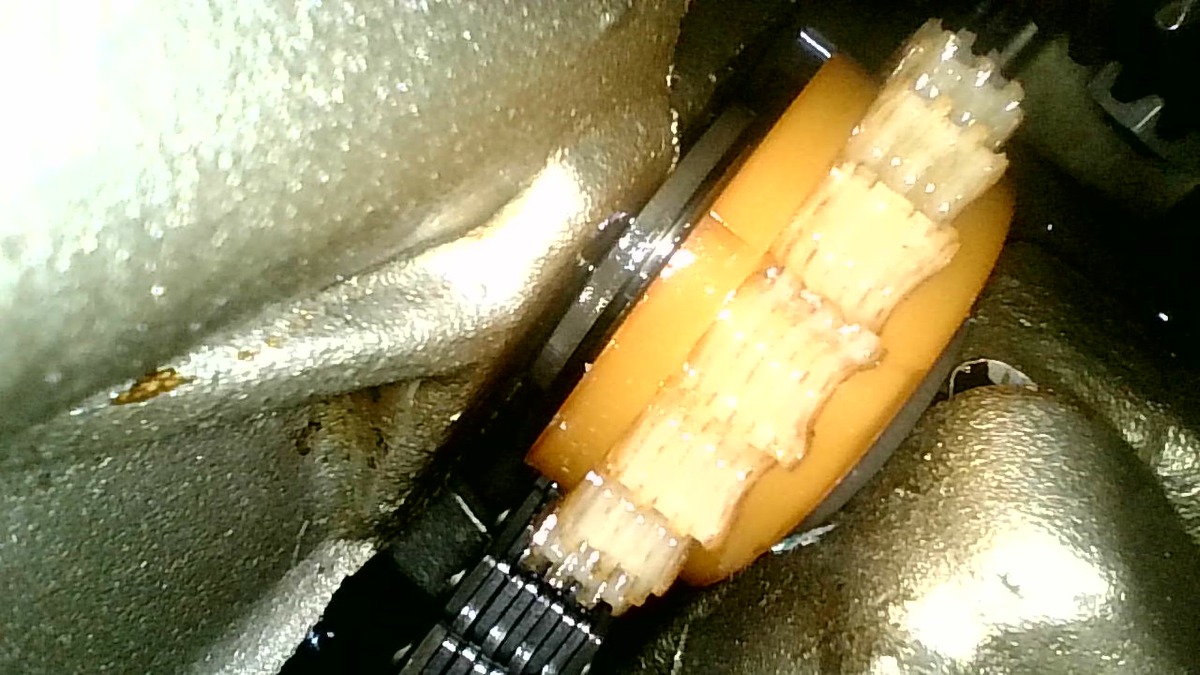
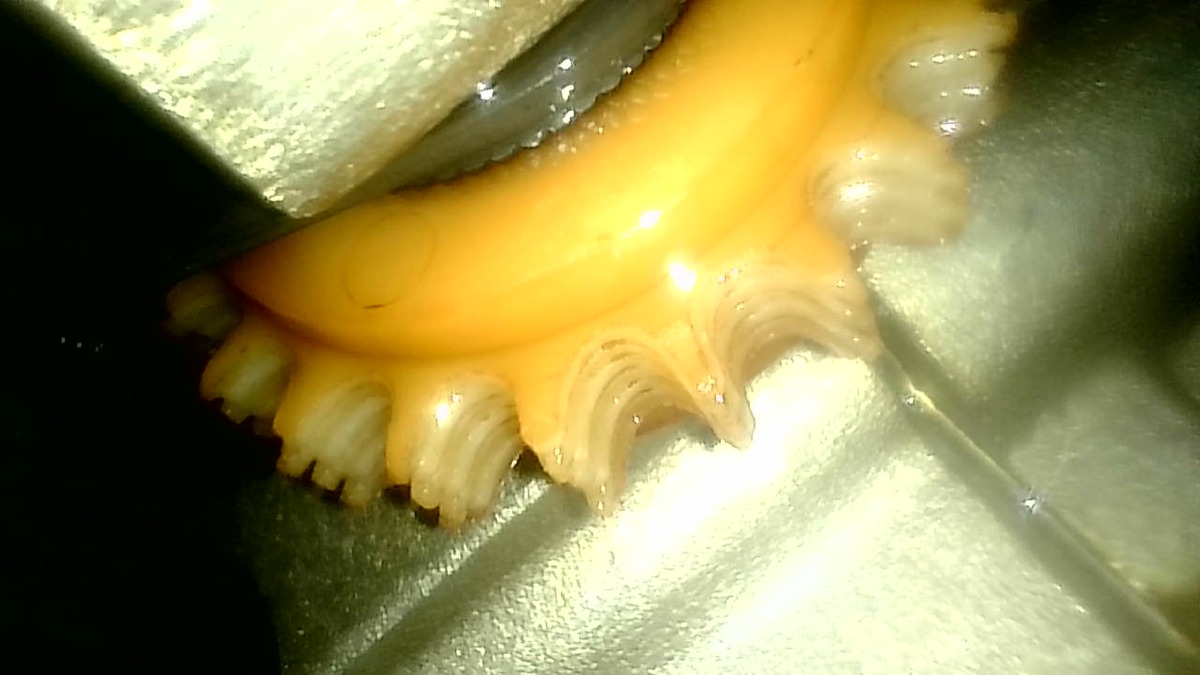
When i looked inside i saw that the Nylon idle gear looks worn to me, but i have also seen much worst gears on other forms on this site.
Here are my questions.
1) How bad is my gear really? I fear i have recent excessive wear due to the zx1100 tensioner i put in that was unmodified hence more force on the gear. ( i did not do enough research on this before making the switch)
If it's not that bad i may cut the 10mm of the spring and re install the tensioner or put a manual one on.
2) Any suggestions on where i can get a new sprocket. they are unavailable from Kawasaki and the Liskas one seem to be on backorder or they just aren't making them anymore. ( i will contact them today and see what they say)
3) Do i really need to use a Kawasaki head gasket? After shipping the head gasket alone will cost me over $400!!
This is a touring bike (Voyager) and might get 1000 Miles a year on it as this is not my main bike. It will not be raced around. I normally ride my Kawasaki Voyager Xii.
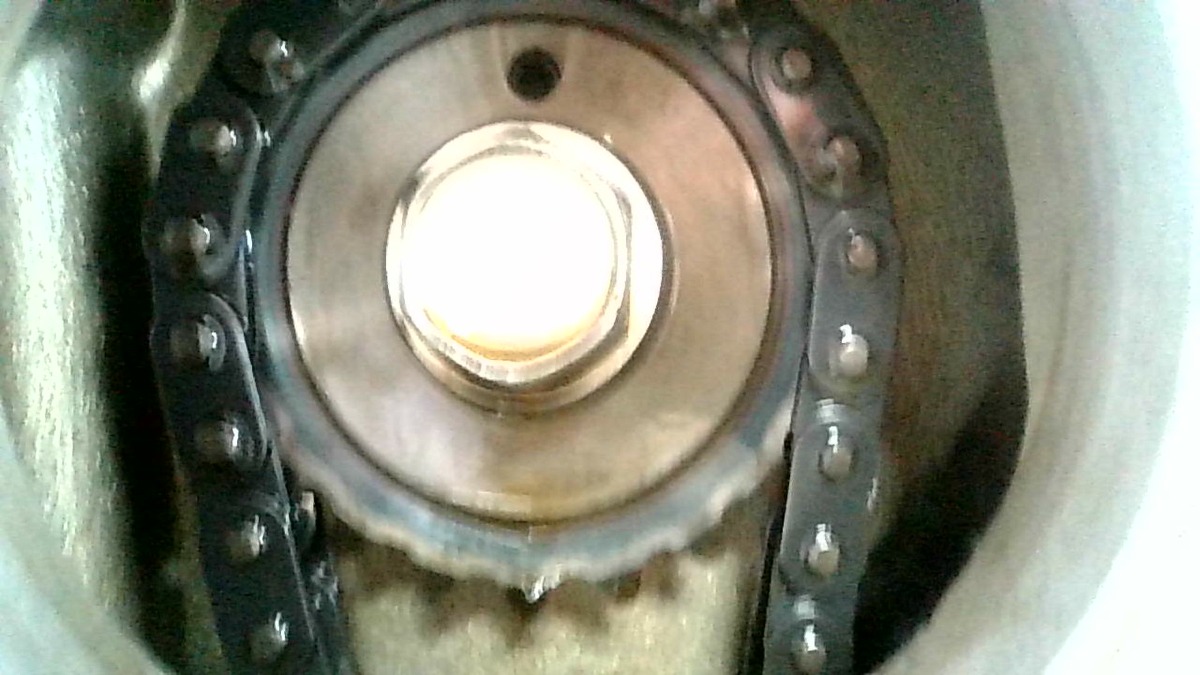
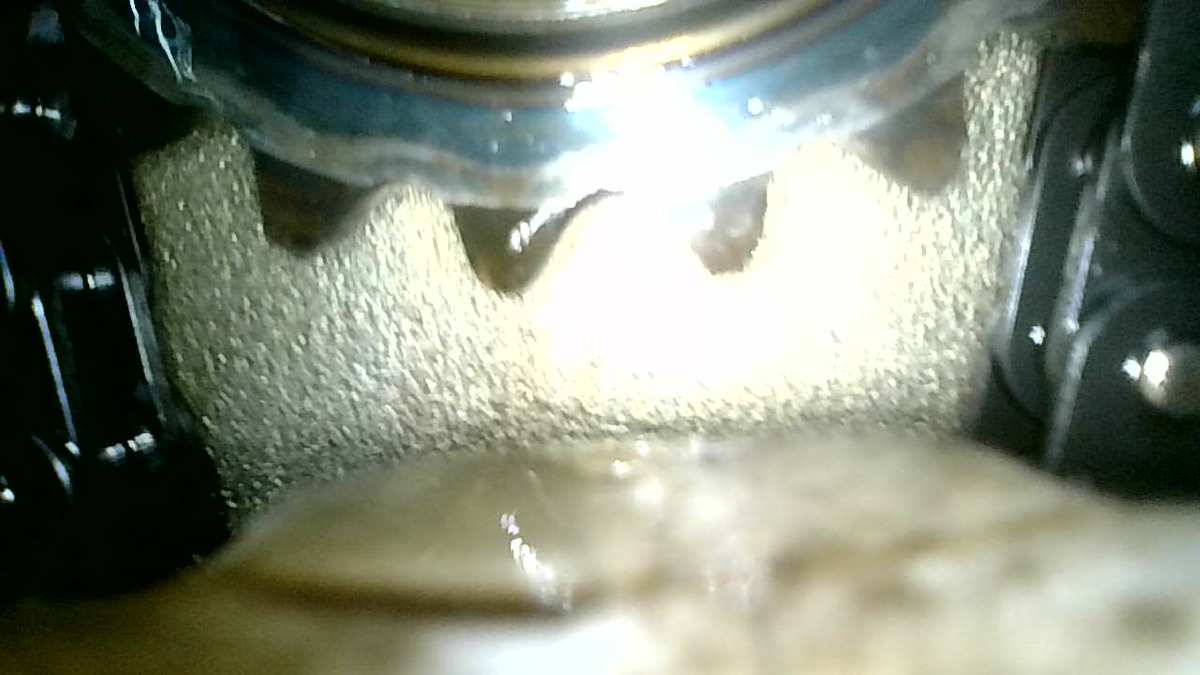
4) The gear for the water pump seems to have some bluing around it. Is that normal? To me that would indicate that it is or is has gotten too hot at some point. Heck maybe that is the source of my noise..
Here are some photos the quality isn't great but it's what i have.
Thank you in advaced to anyone that trying to help.
I checked the starter clutch that dcarver220b suggested was loose. Mine was tight. So that’s not the noise.
When i installed the zx1100 tensioner I did nothing to modify it. Didn't change the bolt for the spring nor did i cut 10mm off the spring.
This is where i am as of now. I pulled the valve cover with the intention of checking vale clearances. The bike has 56000 Miles on it and with this noise i am getting i needed to get a look at the chain and sprockets Guides etc. anyways.
When i looked inside i saw that the Nylon idle gear looks worn to me, but i have also seen much worst gears on other forms on this site.
Here are my questions.
1) How bad is my gear really? I fear i have recent excessive wear due to the zx1100 tensioner i put in that was unmodified hence more force on the gear. ( i did not do enough research on this before making the switch)
If it's not that bad i may cut the 10mm of the spring and re install the tensioner or put a manual one on.
2) Any suggestions on where i can get a new sprocket. they are unavailable from Kawasaki and the Liskas one seem to be on backorder or they just aren't making them anymore. ( i will contact them today and see what they say)
3) Do i really need to use a Kawasaki head gasket? After shipping the head gasket alone will cost me over $400!!
This is a touring bike (Voyager) and might get 1000 Miles a year on it as this is not my main bike. It will not be raced around. I normally ride my Kawasaki Voyager Xii.
4) The gear for the water pump seems to have some bluing around it. Is that normal? To me that would indicate that it is or is has gotten too hot at some point. Heck maybe that is the source of my noise..
Here are some photos the quality isn't great but it's what i have.
Thank you in advaced to anyone that trying to help.
Please Log in or Create an account to join the conversation.
- Kawboy
-
- Offline
- Sustaining Member
-

- Posts: 3280
- Thanks: 1219
Re: Low RPM chain type rattle
2 months 6 days ago - 2 months 6 days ago
Regarding your tensioer sprocket - we've seen worse but I would say you're at the point where I wouldn't run it any longer knowing how bad it is. For comparison, here's pics of a new nylon sprocket I managed to get from Kawasaki Japan and a pic of a Liska gear.
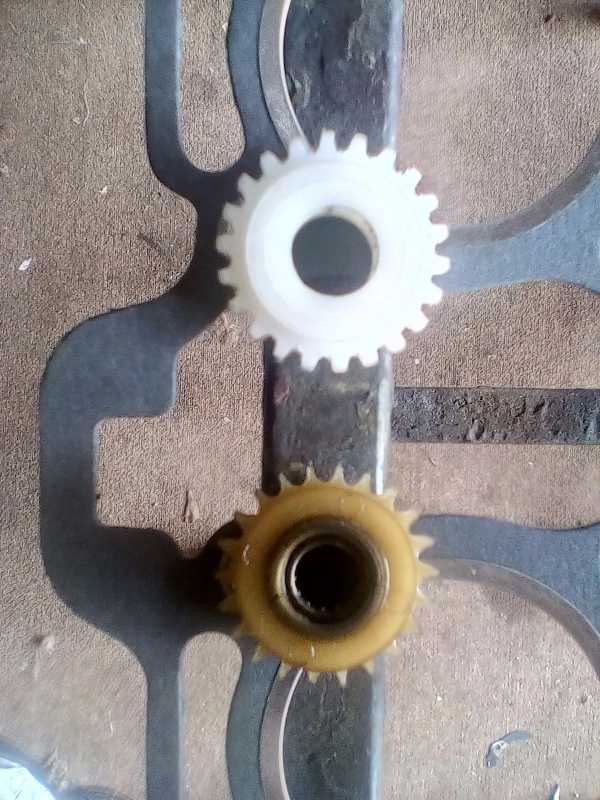
Note the height of the root (bottom) of the teeth from the boss of the hub. When the root diameter gets smaller the effective length of the chain gets longer and the cam chain tensioner needs to take up more "slack" meaning tensioner rod has more protrusion than designed for. If you were using the stock tensioner this effect is even worse because, the more the rod protrudes , the less pressure the tensioner spring has and the ball check in the tensioner needs pressure on it to keep engaged with the tensioner rod. In your case you already changed out the CCT for the zx11 CCT which is a great move.. Many have questioned the need to cut the spring and someone in their infinite wisdom chose 10mm to cut off with no evidence to explain why 10mm was the chosen amount, but no one else has come up with any diferent info regarding that mod.. Just know that we haven't heard otherwise.
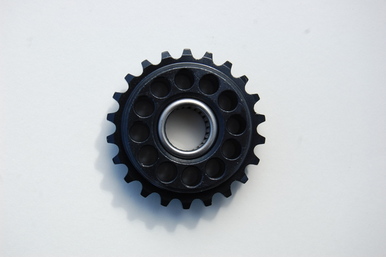
This is a pic of the Liska gear. In my mind, if you want to run the ZX11 tension without cutting the spring, then using the Liska gear would be more preferable than the nylon gear. A stock ZX11 tensioner with an unmodified spring might be too much pressure for the nylon gear and cause premature failure.
The bluing on your water pump drive shaft gear - Can't explain it . I can say that the cam chain has an oiling jet built in to the cylinder block to lubricate/cool the chain and it's not obvious unless you're really looking for it. Maybe the timing chain/ waterpump drive chain also has a lubricating/cooling jet in the block and I haven't seen it yet . Another reason to be cautious when assembling an engine and not apply too much gasket sealer which might break off and start floating around in the oil circuit after the oil filter.
Thanks for posting the pics. Just another reason why Forums like this are a good way of learning about the mechanics of models of motorcycles.
Kudos to you for seeing the discoloration and questioning. I just wish I had more infor for you at this time. I have a spare cylinder block in the basement packed away and if I get a chance , I'll pull it out and look for an oiling/ cooling passage.
Note the height of the root (bottom) of the teeth from the boss of the hub. When the root diameter gets smaller the effective length of the chain gets longer and the cam chain tensioner needs to take up more "slack" meaning tensioner rod has more protrusion than designed for. If you were using the stock tensioner this effect is even worse because, the more the rod protrudes , the less pressure the tensioner spring has and the ball check in the tensioner needs pressure on it to keep engaged with the tensioner rod. In your case you already changed out the CCT for the zx11 CCT which is a great move.. Many have questioned the need to cut the spring and someone in their infinite wisdom chose 10mm to cut off with no evidence to explain why 10mm was the chosen amount, but no one else has come up with any diferent info regarding that mod.. Just know that we haven't heard otherwise.
This is a pic of the Liska gear. In my mind, if you want to run the ZX11 tension without cutting the spring, then using the Liska gear would be more preferable than the nylon gear. A stock ZX11 tensioner with an unmodified spring might be too much pressure for the nylon gear and cause premature failure.
The bluing on your water pump drive shaft gear - Can't explain it . I can say that the cam chain has an oiling jet built in to the cylinder block to lubricate/cool the chain and it's not obvious unless you're really looking for it. Maybe the timing chain/ waterpump drive chain also has a lubricating/cooling jet in the block and I haven't seen it yet . Another reason to be cautious when assembling an engine and not apply too much gasket sealer which might break off and start floating around in the oil circuit after the oil filter.
Thanks for posting the pics. Just another reason why Forums like this are a good way of learning about the mechanics of models of motorcycles.
Kudos to you for seeing the discoloration and questioning. I just wish I had more infor for you at this time. I have a spare cylinder block in the basement packed away and if I get a chance , I'll pull it out and look for an oiling/ cooling passage.
Last edit: 2 months 6 days ago by Kawboy.
Please Log in or Create an account to join the conversation.
- scotch
-

- Offline
- Sustaining Member
-
- Posts: 2058
- Thanks: 951
Re: Low RPM chain type rattle
2 months 5 days ago
As it happens, I have an engine apart !!!!!

The shaft in question is Pressure lubed.
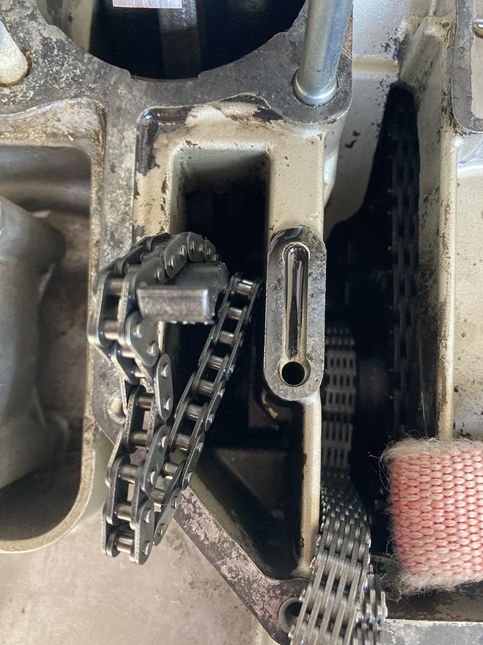
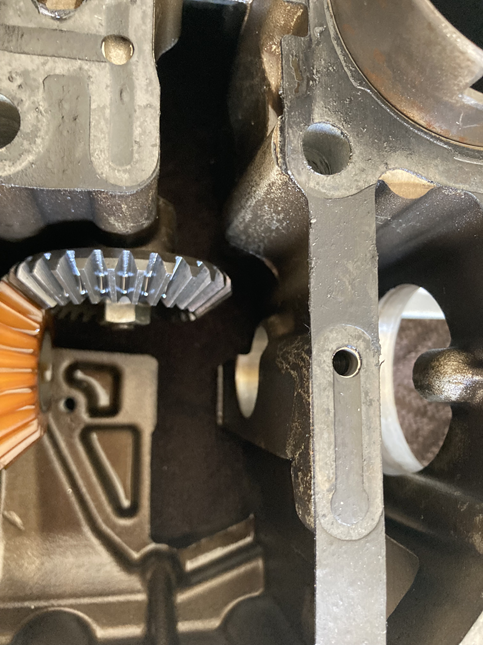
The shaft in question is Pressure lubed.
1980 KZ 1300 sr# KZT30A-009997
Always High - Know Fear !
Always High - Know Fear !
Please Log in or Create an account to join the conversation.
- DX40
-
Topic Author
- Offline
- New Member
-
- Posts: 9
- Thanks: 1
Re: Low RPM chain type rattle
2 months 5 days ago
I think I am going to go withj the Liska sprocket and zx11 tensioner rout.
( I contacted Liska , they should be back in stock in 3 weeks.)
As for the bluing of the sprocket on the water pump. It looked well coted in oil and lubricated. I may leave it alone. I do have a parts bike with a seized engine and may look at that gear and use it if it's easy to change.
On the other hand,.getting to the parts bike that is buried in my storage unit may be the bigger battle.
( I contacted Liska , they should be back in stock in 3 weeks.)
As for the bluing of the sprocket on the water pump. It looked well coted in oil and lubricated. I may leave it alone. I do have a parts bike with a seized engine and may look at that gear and use it if it's easy to change.
On the other hand,.getting to the parts bike that is buried in my storage unit may be the bigger battle.
The following user(s) said Thank You: Kawboy
Please Log in or Create an account to join the conversation.
Moderators: scotch
Time to create page: 0.164 seconds