
Zed-Parts Carb Diaphragms
- scotch
-

- Offline
- Sustaining Member
-

- Posts: 2060
- Thanks: 952
Re: Zed-Parts Carb Diaphragms
8 months 3 weeks ago - 8 months 3 weeks ago
A thought or two about diaphragms.In the late summer of ’80, a friend on his Gold Wing and myself on my new ’80 1300 struck-out on a 3-week ride across Canada. A late start that first day had us stopping for the night just East of Calgary. The next day was humid and forecast to be hot. Within an hour on the road my engine started misfiring badly. I pulled off the highway, turned the engine off and pondered the source of the issue. I touched the carbs and they were ICE COLD. Being a pilot and having experienced “Carb Icing”, this became my first thought.
The Venturi Effect (Pressure Drop): As air passes through the carburetor's narrow, hourglass-shaped throat (the venturi), its velocity increases and its pressure drops. According to physical principles, a drop in pressure results in a significant drop in temperature.
About two minutes later (After the ice had melted?) the bike started on all 6 and ran fine for about 30 minutes when the issue returned. And repeat! Carbs ice cold. Again, it seemed reasonable to suspect carb-icing. Waited about 2-3 minutes and back on the road. This problem plagued me for the rest of the day but I had no problems after that. So again, I believed the humidity and cold carbs had been the issue. As it turned out I had a defective Pulser-coil. And now back to Diaphragms.
Be patient, I’m getting there!
The OEM diaphragms have a reinforcing membrane bonded between (Butyl?). This provides a thin, flexible and non-stretch diaphragm.When I first became aware of the after-market diaphragms, they appeared to be merely a single layer of Butyl (?) and my first thought; remembering back to the 1980 “road trip” was: How would they preform when cold.With the current controversy regarding some of the after-market diaphragms being too stiff it seems logical to believe they could become inoperable when the carbs get ice cold when highway riding.To my knowledge no one has commented to this regard specifically but “carvers” latest video demonstrating an after-market diaphragm being so stiff (at room temperature) brings into question the actual suitability of this product, as it differs significantly from the OEM’s.
Several years ago, I thought I’d explore the possibility of making diaphragms, similar in construction as the OEM’s. That project got side-lined until several days ago when I thought I’d resurrect the idea. Some technical issues in making these have yet to be dealt with but I will continue and see what comes of this idea.
For the life of me I can't get a couple of videos posted here, showing the action of my diaphragms so you'll just have to accept me at my word that they perform as well as the OEM's.
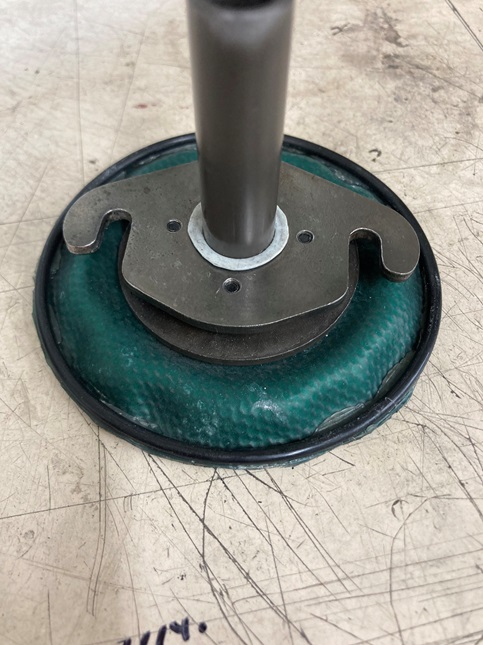
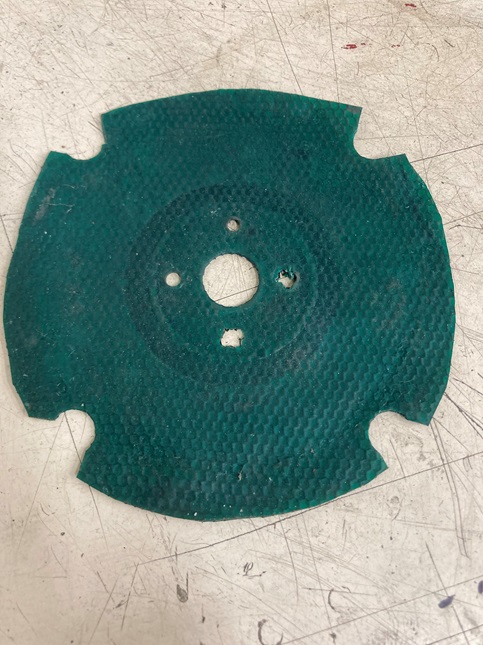
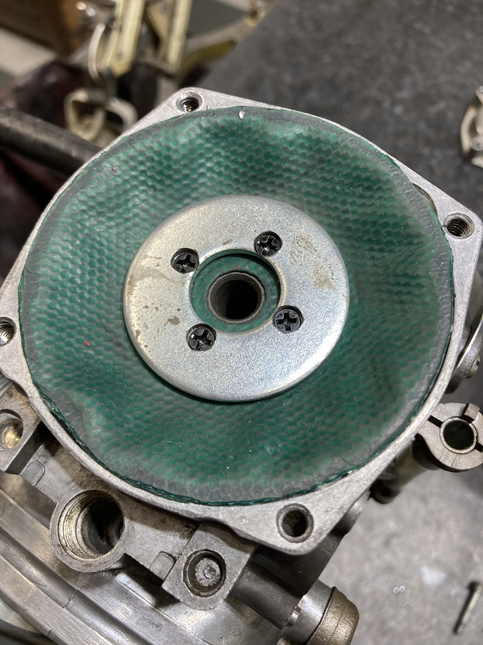
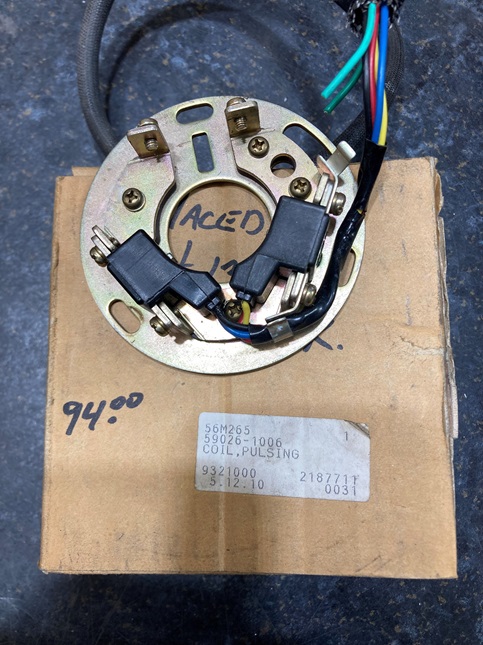
Just for "shits-n-giggles" because they were mentioned here: note the price....back in the day. Kawasaki supplied them as a complete assembly
The Venturi Effect (Pressure Drop): As air passes through the carburetor's narrow, hourglass-shaped throat (the venturi), its velocity increases and its pressure drops. According to physical principles, a drop in pressure results in a significant drop in temperature.
About two minutes later (After the ice had melted?) the bike started on all 6 and ran fine for about 30 minutes when the issue returned. And repeat! Carbs ice cold. Again, it seemed reasonable to suspect carb-icing. Waited about 2-3 minutes and back on the road. This problem plagued me for the rest of the day but I had no problems after that. So again, I believed the humidity and cold carbs had been the issue. As it turned out I had a defective Pulser-coil. And now back to Diaphragms.
Be patient, I’m getting there!
The OEM diaphragms have a reinforcing membrane bonded between (Butyl?). This provides a thin, flexible and non-stretch diaphragm.When I first became aware of the after-market diaphragms, they appeared to be merely a single layer of Butyl (?) and my first thought; remembering back to the 1980 “road trip” was: How would they preform when cold.With the current controversy regarding some of the after-market diaphragms being too stiff it seems logical to believe they could become inoperable when the carbs get ice cold when highway riding.To my knowledge no one has commented to this regard specifically but “carvers” latest video demonstrating an after-market diaphragm being so stiff (at room temperature) brings into question the actual suitability of this product, as it differs significantly from the OEM’s.
Several years ago, I thought I’d explore the possibility of making diaphragms, similar in construction as the OEM’s. That project got side-lined until several days ago when I thought I’d resurrect the idea. Some technical issues in making these have yet to be dealt with but I will continue and see what comes of this idea.
For the life of me I can't get a couple of videos posted here, showing the action of my diaphragms so you'll just have to accept me at my word that they perform as well as the OEM's.
Just for "shits-n-giggles" because they were mentioned here: note the price....back in the day. Kawasaki supplied them as a complete assembly
1980 KZ 1300 sr# KZT30A-009997
Always High - Know Fear !
Always High - Know Fear !
Last edit: 8 months 3 weeks ago by scotch.
The following user(s) said Thank You: dcarver220b, zed_thirteen
Please Log in or Create an account to join the conversation.
- dcarver220b
-
 Topic Author
- Offline
- Sustaining Member
-
- Posts: 1316
- Thanks: 304
Re: Zed-Parts Carb Diaphragms
8 months 3 weeks ago
94 dollars.. RipOff! Robbery!
Funny how decades will change perspective..
Say What, you actually have one? How much? $500, OK! SOLD!
To display videos...
Funny how decades will change perspective..
Say What, you actually have one? How much? $500, OK! SOLD!
To display videos...
Please Log in or Create an account to join the conversation.
- scotch
-
- Offline
- Sustaining Member
-
- Posts: 2060
- Thanks: 952
Re: Zed-Parts Carb Diaphragms
8 months 3 weeks ago
Yes, the prices back then were, by today's standards, ridiculously affordable.
1980 KZ 1300 sr# KZT30A-009997
Always High - Know Fear !
Always High - Know Fear !
Please Log in or Create an account to join the conversation.
- dcarver220b
-
Topic Author
- Offline
- Sustaining Member
-
- Posts: 1316
- Thanks: 304
Re: Zed-Parts Carb Diaphragms
8 months 3 weeks ago
Are you intrigued enough to perform a Zed-Parts diaphragm analysis for us?

Please Log in or Create an account to join the conversation.
Moderators: scotch
Time to create page: 0.190 seconds